

Supplementary Guide & Glossary
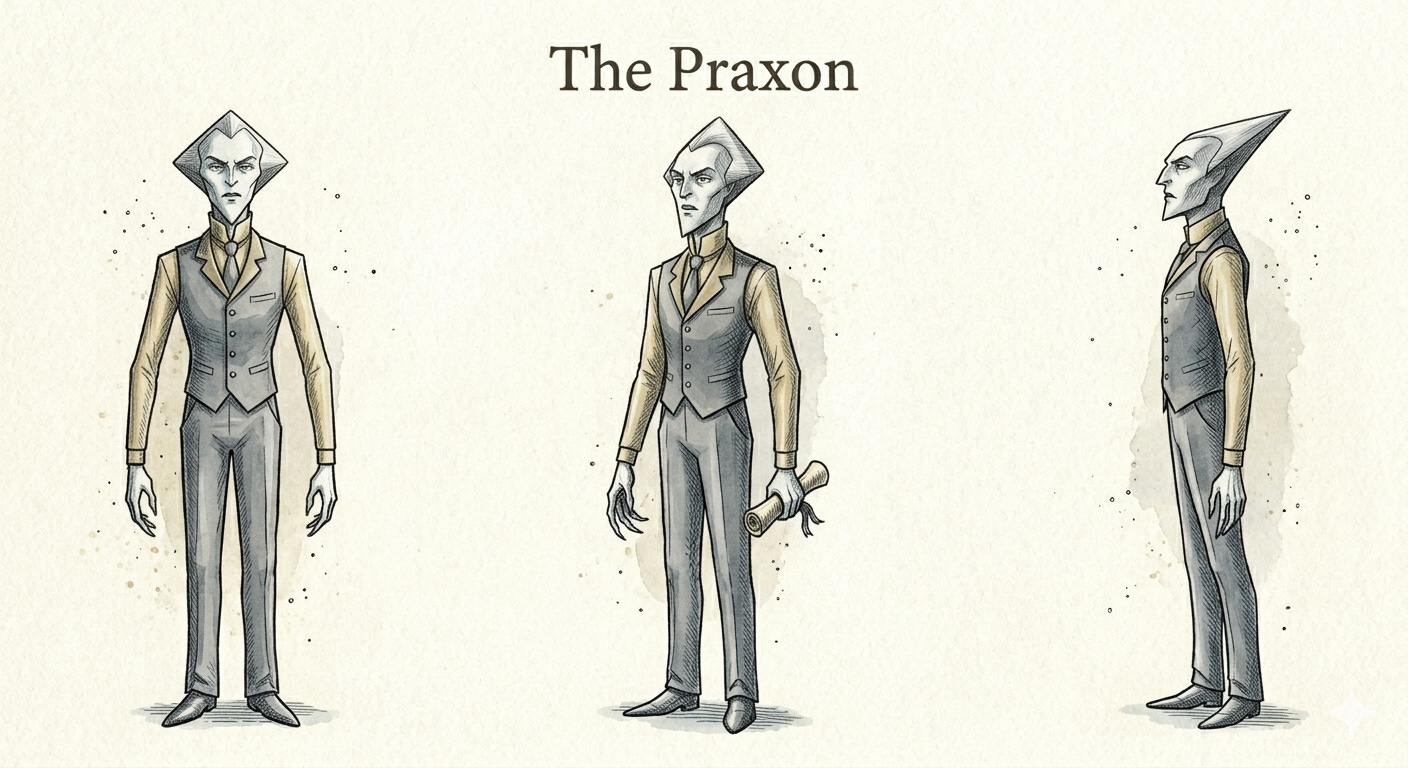
"The Praxon Who Learned How To Listen"

A Few Things Worth Knowing
This story lives in two worlds at once.
It was written in English but its heart beats in Spanish. The village, the fruit, the music, the very name of the thing that heals. All of it carries Spanish in its bones. That was intentional. The Wumblés and their world existed long before The Praxon arrived. Their language reflects that.
For readers who grew up speaking only English some of these words may feel unfamiliar at first. That’s okay. That small moment of unfamiliarity is part of the story.
But to help the reading flow a little more easily I’ve put together a short glossary of the key words and phrases you’ll encounter in Pueblo de Luz. Alongside that you’ll find the scripture references that quietly shaped this story from the very beginning.
None of these references appear in the verse itself. But they are there. Underneath everything. The way roots run deep under a hillside you can only see from far away.
There is always room for one more.
A BRIEF GLOSSARY Words worth knowing before you begin
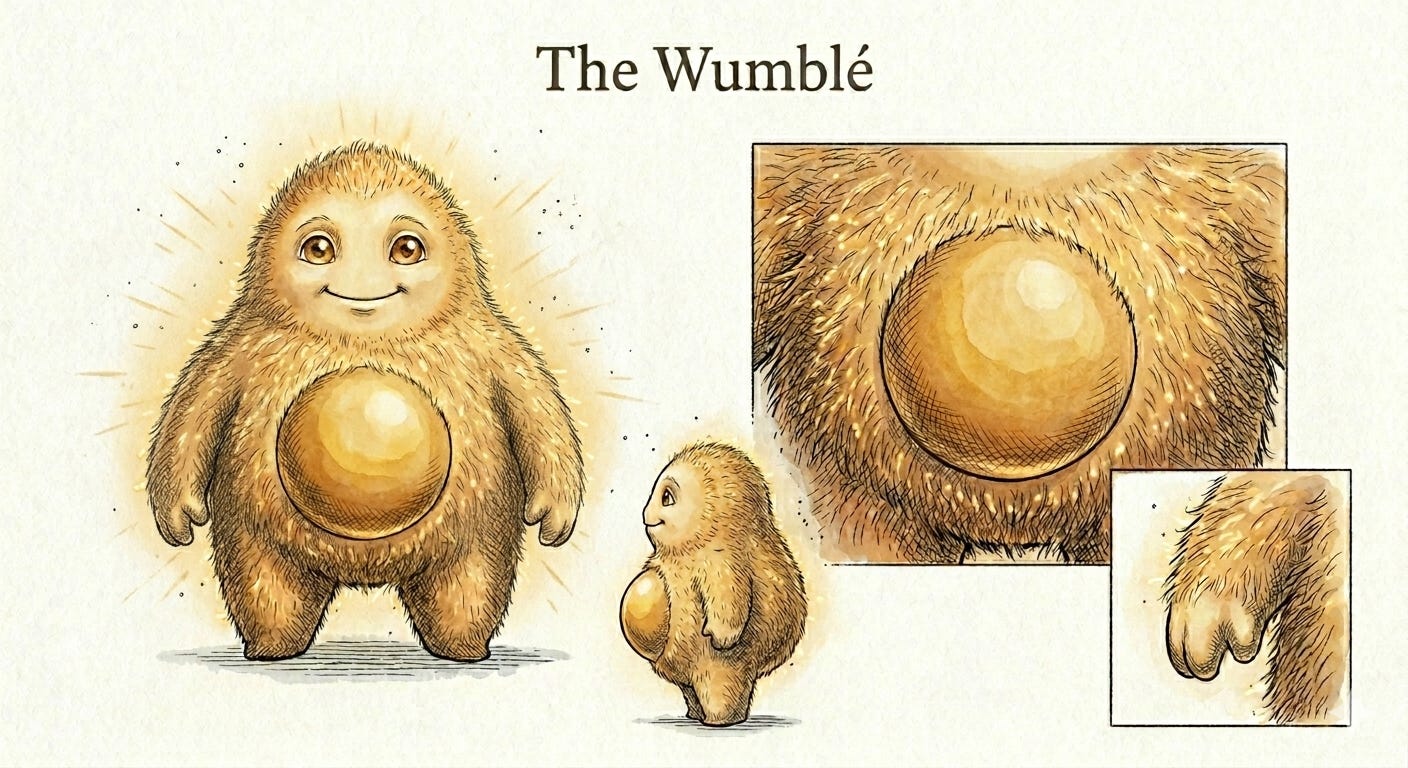
Wumblés (woom-BLAYS) The warm, glowing creatures of Pueblo de Luz. Their name rhymes with the Spanish ending -és, giving it a gentle musical lift. Not a real Spanish word — but it feels like it always was.
Pueblo de Luz (PWEH-blo deh LOOZ) Spanish for Village of Light. In this story, a city on a hill that glows for all to see.
Escuchamos (es-koo-CHA-mos) Spanish for we listen. The ancient fruit of Pueblo de Luz. Named for what it was always meant to do.
Escuchamos juntos (es-koo-CHA-mos HOON-tos) Spanish for we listen together. The opening words of the listening song.
El Llamador (el ya-ma-DOR) Spanish for the one who calls. The Village Ear of Pueblo de Luz. He plays his guitarra and sings the listening song every evening to call the Wumblés to the great table.
Guitarra (ghee-TAR-ah) Spanish for guitar. The instrument the Llamador plays to call the village together.
Escuchara (es-koo-CHA-rah) Spanish for would listen. A word of possibility and longing. In this story, the few quiet notes the Llamador plays when he finally lifts his guitarra again — asking softly whether anyone is ready to hear.
Pinionade (pin-ee-oh-NADE) Not a real word — but it should be. The Praxon’s bottled drink, made from processed Escuchamos. Designed to let you hear only what you already believe. Sounds refreshing. Tastes like certainty. Leaves you unable to listen to anyone but yourself.
The Sticky Icky (exactly as it sounds) The dark, thick waste byproduct of processing Escuchamos into Pinionade. Blacker than crow. Thicker than thick. It dims the glow of everything it touches. And eventually — it catches everyone who ignores it long enough.
Drumbles (DRUM-buls) The big round barrels The Praxon stored his Escuchamos seeds in. Not a real word — but it sounds exactly like what it is.
SCRIPTURE REFERENCES — Supporting Biblical Foundation
Matthew 5:14 (NLT) “You are the light of the world — a city on a hill cannot be hidden.” Referenced in: Pueblo de Luz sitting high on the hill, glowing and visible for miles. The Wumblés as a community of light.
Matthew 5:15 (NLT) “No one lights a lamp and then puts it under a basket.” Referenced in: Movement VI — the hill going dark as a basket turned over its light. The Praxon extinguishing what was never his to extinguish.
Matthew 7:12 (NLT) “Do to others whatever you would like them to do to you.” Referenced in: The Golden Rule as the foundational moral spine of the entire story. The Praxon receiving exactly what he gave.
Galatians 6:7 (NLT) “You will always harvest what you plant.” Referenced in: The sticky icky catching The Praxon. His own waste becoming his trap. And literally in Movement XI — the seeds going back into the ground.
Proverbs 21:13 (NLT) “Those who shut their ears to the cries of the poor will be ignored in their own time of need.” Referenced in: The Praxon dismissing the Wumblés completely. Then calling out from the sticky icky and finding no one comes.
1 John 1:5-7 (NLT) “God is light and there is no darkness in him at all. If we say we have fellowship with him but go on living in spiritual darkness, we are lying. But if we are living in the light of God’s presence, just as Christ is, then we have fellowship with each other.” Referenced in: Movement IX — The Crack. The honest light revealing The Praxon to himself. Being in the light means nothing hidden.
1 John 1:8 (NLT) “If we claim we have no sin, we are only fooling ourselves and not living in the truth.” Referenced in: The Praxon’s complete self-deception. The lie he tells others and believes himself completely.
1 John 3:17 (NLT) “If someone has enough money to live well and sees a brother or sister in need but shows no compassion — how can God’s love be in that person?” Referenced in: The Praxon who has the means to do anything — and uses it entirely for himself while the Wumblés suffer around him.
1 John 3:18 (NLT) “Let us not love with words or speech but with actions and in truth.” Referenced in: The Wumblés throughout. They never argue. Never debate. Never out-talk The Praxon. They simply act. They help him out of the sticky icky without a single speech.
1 John 4:20 (NLT) “If someone says I love God but hates a fellow believer, that person is a liar.” Referenced in: The Praxon’s claim to have civilized and helped the Wumblés while treating them as invisible and disposable.
2 Timothy 4:3 (NLT) “For a time is coming when people will no longer listen to sound and wholesome teaching. They will follow their own desires and will look for teachers who will tell them whatever their itching ears want to hear.” Referenced in: Pinionade itself. A bottled drink that tells you only what you already believe. The Wumblés drinking it and losing their ability to listen to each other. The great table going quiet.
Acts 10:34 (NLT) “God shows no partiality.” Referenced in: The dignity of the Wumblés. Every person — every creature — deserving of equal treatment and respect regardless of where they come from or what they look like.
All English scripture references use the New Living Translation (NLT). All Spanish scripture references use the Nueva Traducción Viviente (NTV).